
North Dakota HHS Phishing Breach Exposed Protected Health Information
A phishing email led to unauthorized access to three North Dakota HHS employee accounts. This report traces the confirmed response timeline, the protected health information involved, and the records affected people should review.
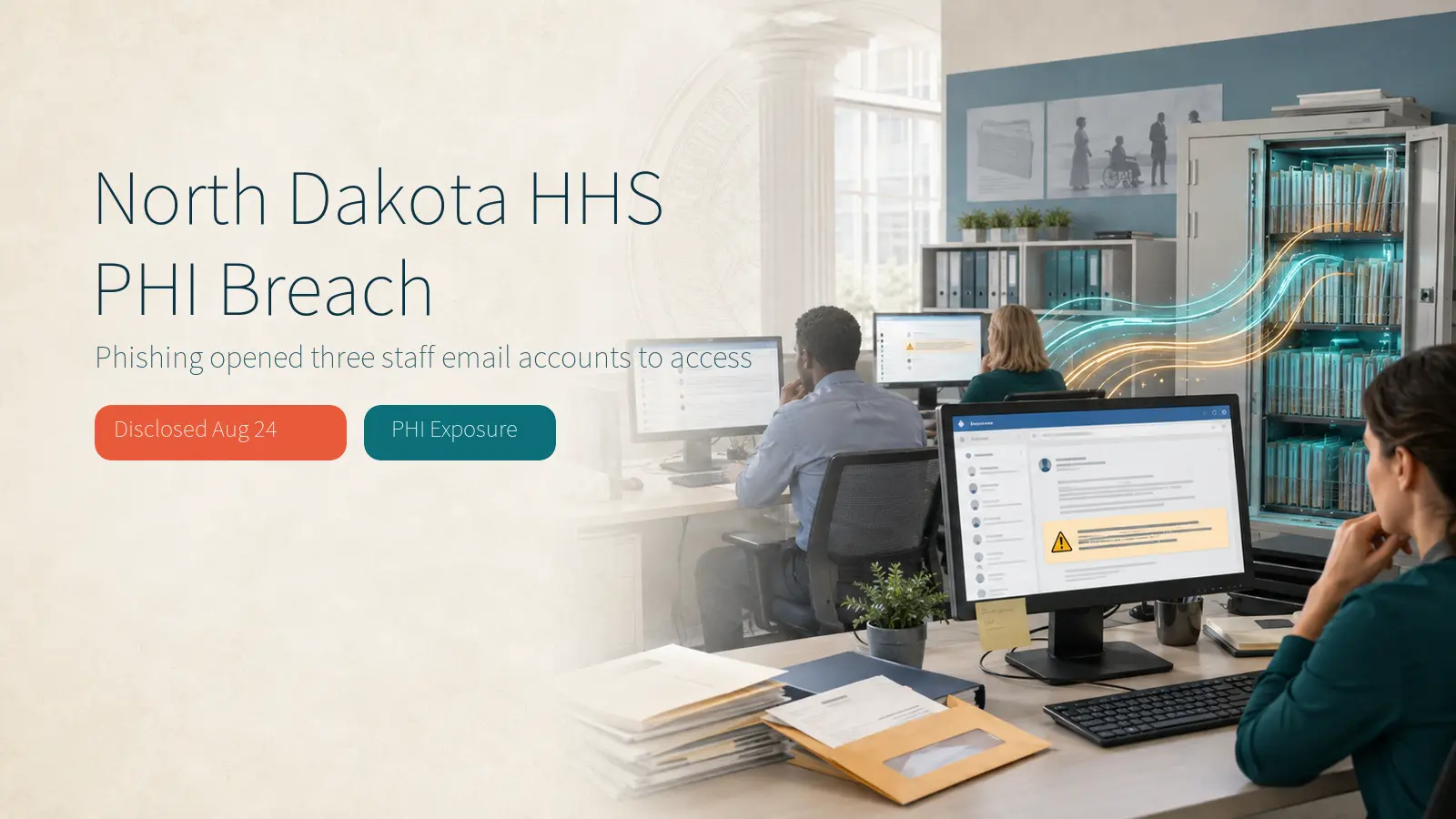
Incident overview
The North Dakota Department of Health and Human Services disclosed on August 24, 2026 that a phishing incident involved protected health information belonging to certain Developmental Disabilities service recipients. North Dakota Information Technology detected and stopped a phishing email attack on July 21. Its investigation found that three Developmental Disabilities employees interacted with the message, allowing an unauthorized third party to access their email accounts.
On July 22, NDIT identified unusual sign-in activity connected to the incident and secured the affected accounts to prevent further access. HHS then reviewed the accounts to determine what protected health information had been accessed and who was affected. That review concluded on August 14. The timeline shows two distinct workstreams: containing an account compromise and examining the information stored inside the compromised mailboxes.
From phishing email to account access
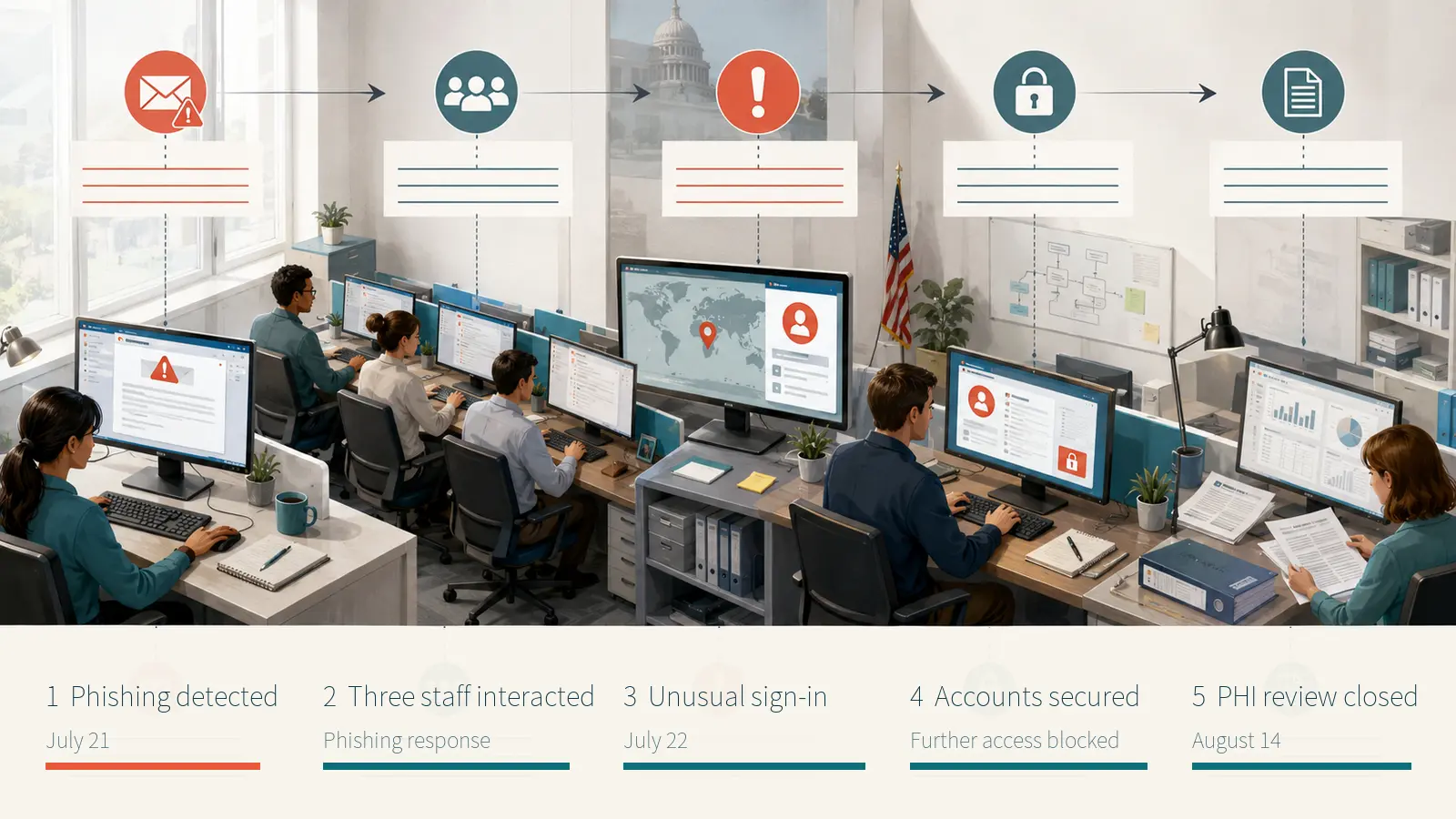
The one-day gap between the initial mail alert and the unusual sign-in finding matters. Blocking a phishing message does not invalidate credentials or sessions that may already have been captured or approved. NDIT linked the mail event to the following day's authentication activity, then protected three accounts. This is a practical example of why email-gateway alerts, identity logs, and user reports need to be handled as one incident rather than separate tickets.
Email accounts can contain messages, attachments, service records, and links to other work systems. Securing the accounts was therefore only the first step. HHS also had to examine the mailboxes, identify messages containing protected information, determine the affected recipients, and prepare notifications. The August 14 review completion date marks the end of that privacy-impact work, not merely the restoration of account access.
Information involved
The information varied by person and may have included names, contact details, dates of birth, ages, Developmental Disabilities service information, health-plan names and identification numbers, medical information, and guardian information. These combinations can make follow-on impersonation attempts sound credible. A caller who knows a service name, guardian relationship, or health-plan detail should still be verified through a published agency number or a familiar portal.
- Identity details: name, date of birth, and age
- Contact information stored for the individual
- Developmental Disabilities service information
- Health-plan name and identification number
- Medical information and guardian details
Containment, review, and notification
The response proceeded through containment, privacy review, individual notification, and regulatory reporting. NDIT stopped the phishing campaign and secured the affected mailboxes. HHS reviewed the protected information, identified affected individuals, and began written notifications. It also notified the U.S. Department of Health and Human Services Office for Civil Rights and the North Dakota Attorney General's Office.
HHS said it is working with NDIT to strengthen safeguards and improve cybersecurity awareness training. Training is one part of the response, while identity controls provide the technical backstop. Organizations also need unusual-sign-in monitoring, session revocation, authentication-method review, and mailbox checks. Privacy personnel then need a separate completion criterion for information review and notification.
Checks for affected people
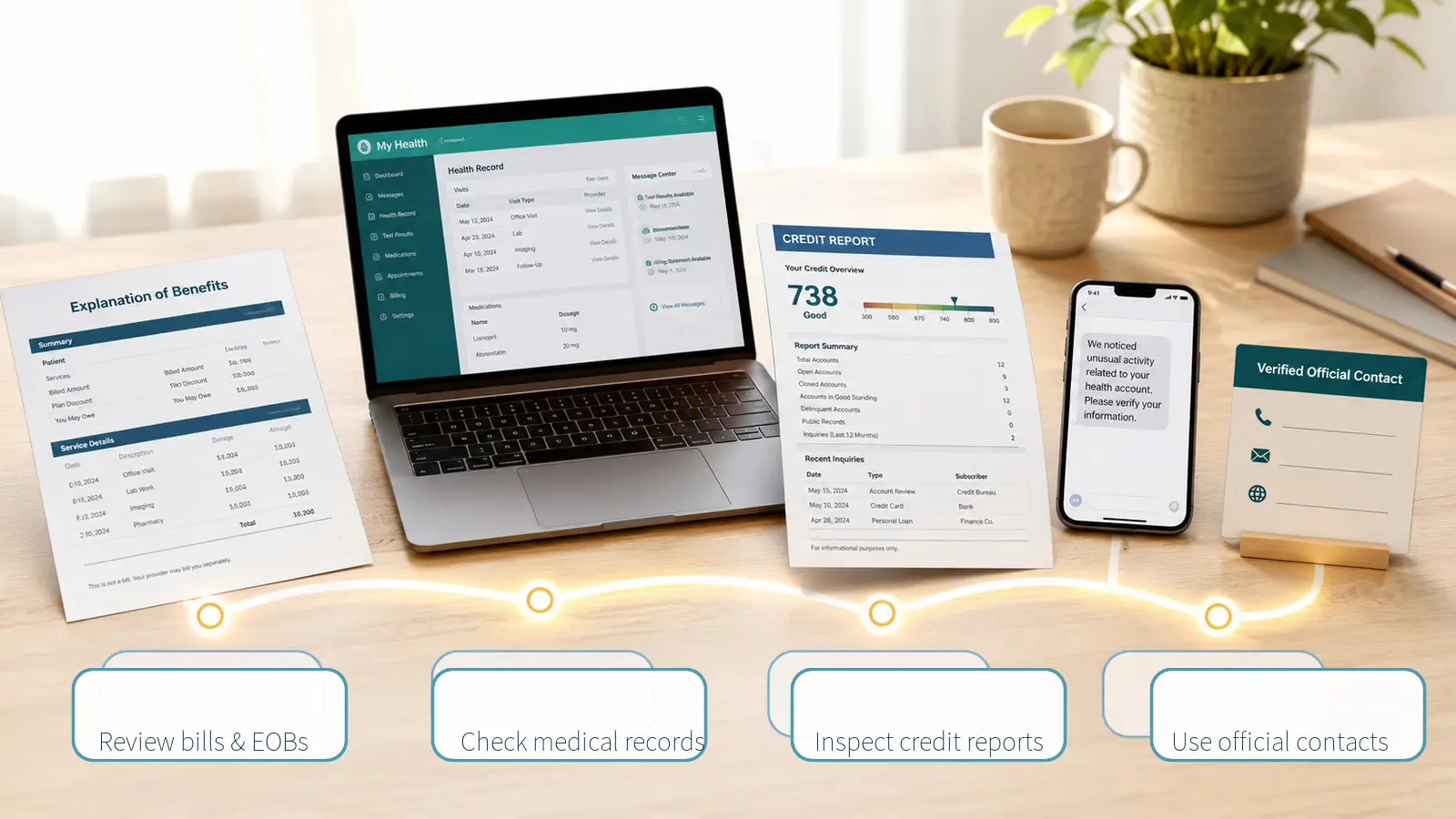
HHS advised affected people to review financial and medical accounts, statements, credit reports, medical records, and explanations of benefits for unusual activity. The review should continue as new statements arrive. Bills for services never received, prescriptions never filled, unfamiliar medical debt, or a notice that insurance benefits have reached a limit can be signs that medical information is being misused.
- Read the written notice and identify which information types apply to the recipient or guardian.
- Sign in directly to the usual medical portal and compare visits, prescriptions, tests, and account alerts.
- Review explanations of benefits and bills for unfamiliar providers, dates, services, or charges.
- Inspect credit reports and financial accounts, then consider a fraud alert or credit freeze when appropriate.
- Stop unexpected requests for personal or insurance information and call the agency using a published number.
The Federal Trade Commission recommends obtaining medical records from the relevant providers and requesting corrections when misuse or errors appear. The North Dakota Attorney General explains that a free one-year fraud alert can be started through one credit bureau, while a credit freeze must be placed separately with each bureau. Those measures address different risks and should be chosen according to what the written notice and account reviews show.
Operational lessons
Healthcare and social-service organizations can turn this incident into a concrete control checklist. Link phishing alerts and identity logs under one case. Identify every user who interacted with the message. Review active sessions, registered authentication methods, forwarding rules, and delegated access. Treat account containment and privacy-impact review as separate milestones. Finally, prepare individual notices that state the specific categories involved and provide a verified contact path.
- Correlate email and identity telemetry
- Identify interacting users and affected accounts
- Review sessions, authentication methods, and mailbox rules
- Examine mailbox content and attachments for sensitive data
- Separate containment, privacy review, notification, and reporting milestones
What the timeline shows
The North Dakota HHS case moved from phishing detection on July 21 to unusual sign-in confirmation on July 22, account containment, completion of the PHI review on August 14, and public notice on August 24. The sequence demonstrates that a phishing case is not finished when the message is removed. The organization must determine whether an account was accessed, what information was inside it, and which people require notice. Recipients and guardians should continue comparing medical, insurance, credit, and financial records as new statements arrive.
Sources reviewed
- Security Notice of Unauthorized Access to PHINorth Dakota Department of Health and Human Services · Official source
- What To Know About Medical Identity TheftFederal Trade Commission · Official source
- Preventing Identity TheftNorth Dakota Attorney General · Official source
- Credit Security FreezeNorth Dakota Attorney General · Official source
SECUFOCUS NOW reorganized and analyzed the material above. This article does not replace the original sources.
Related SecuNote articles
Langflow Code Injection RCE (CVE-2026-0768): Active Exploitation and Response
CVE-2026-0768 is now being exploited against internet-accessible Langflow deployments. This analysis explains the vulnerable…
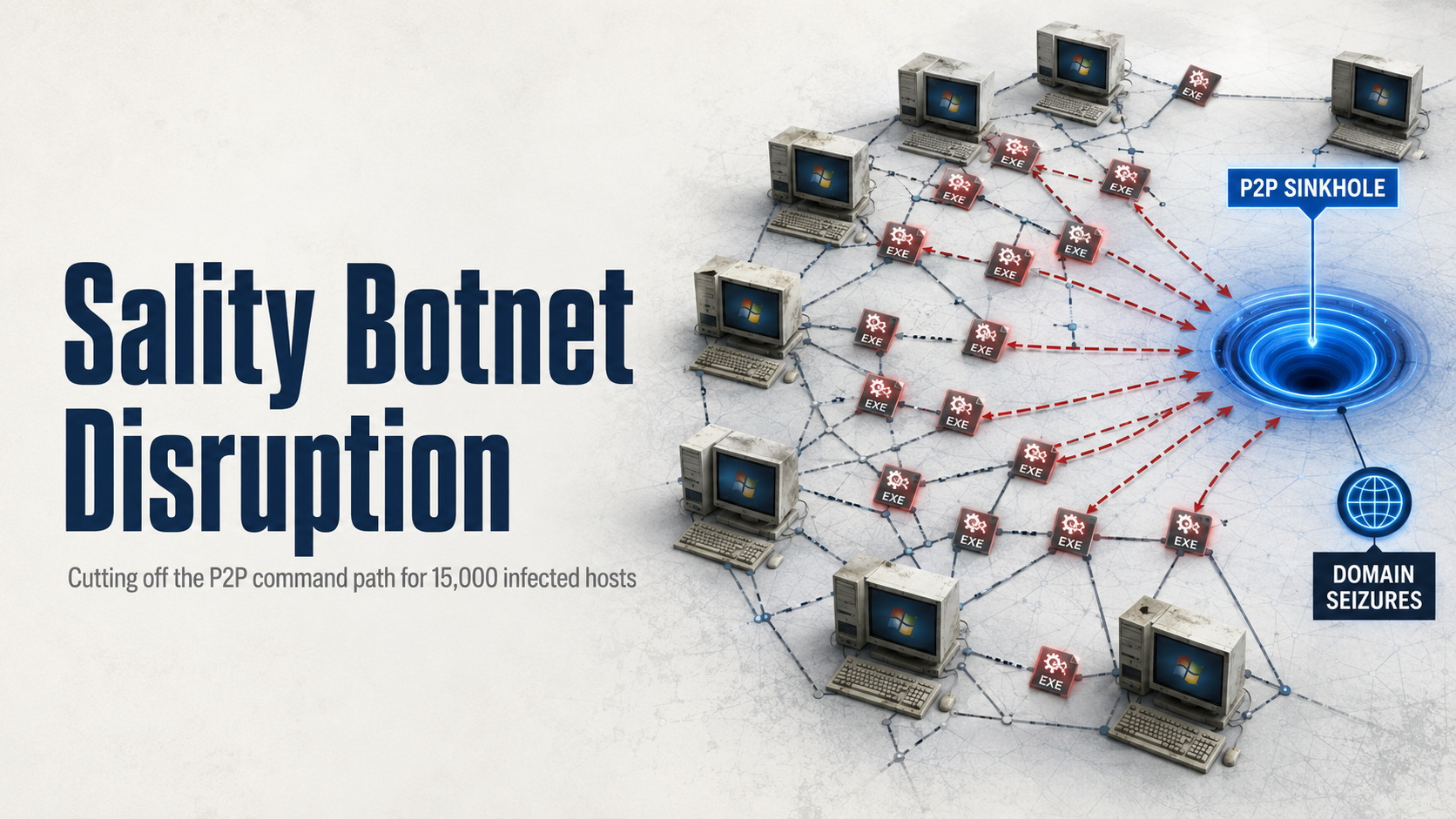
Sality Botnet Disruption: How the P2P Sinkhole Cut Its Command Path
A multinational operation disrupted Sality's peer-to-peer command path across more than 15,000 infected hosts. This analysis…
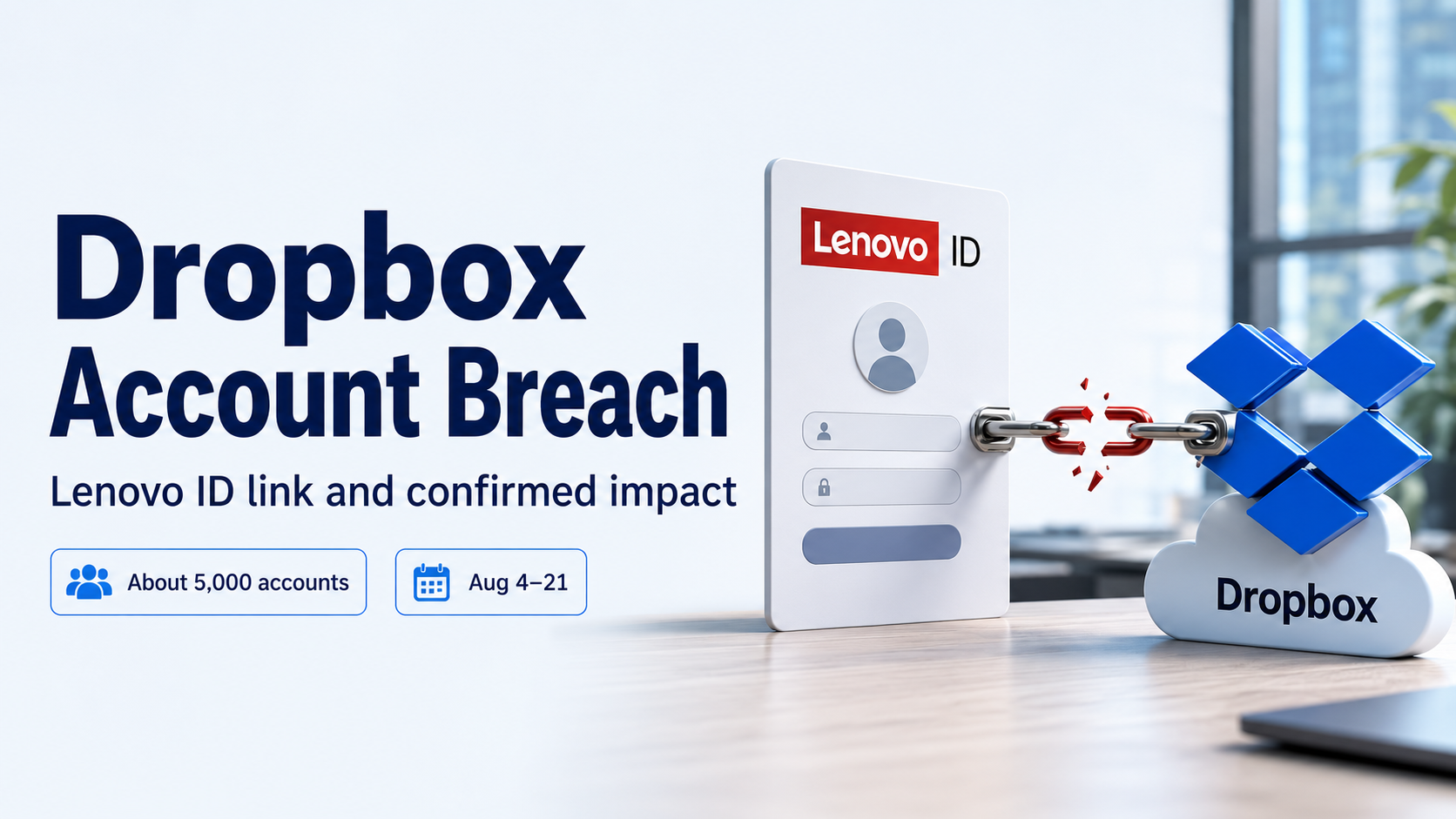
Dropbox Account Breach: Lenovo ID Integration and Confirmed Impact
A legacy Lenovo ID integration enabled unauthorized access to about 5,000 Dropbox accounts. This report explains the confirmed…
Comments
No comments yet.