
August 18 Consumer Security Briefing: Search Ads, Apple Threat Alerts, and Debt Relief
Paid bill-payment search ads, Apple threat notifications, and debt-relief offers look different, but the safe response is shared: leave the message or ad, open the official channel directly, and verify before sharing money or credentials.
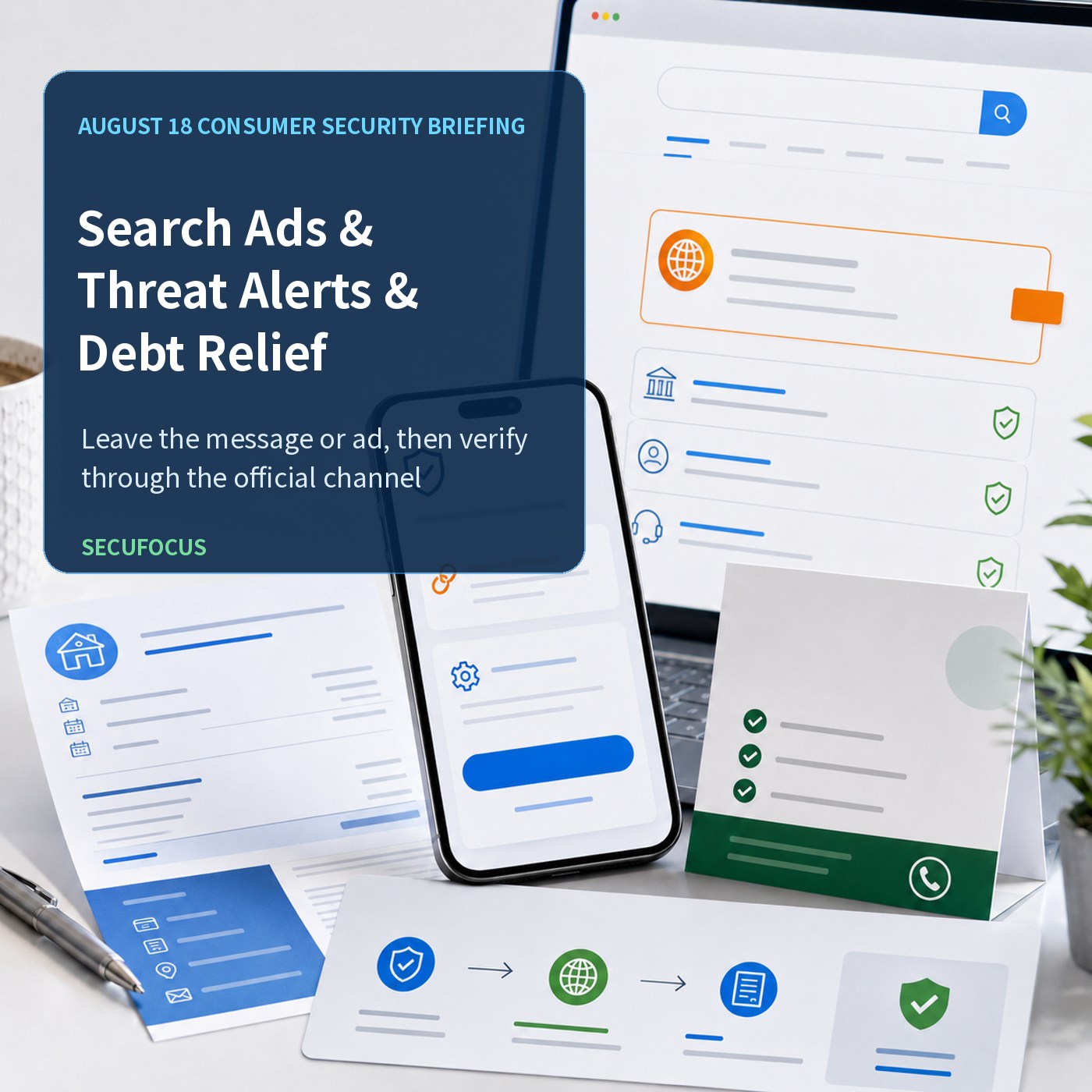
Three issues to check this week
The review window runs from August 12 at 16:00 through August 18 at 15:59 KST. This edition excludes repeat coverage of the previous day's local-government impersonation, customer-data notices, and debt-relief advertising, and focuses on three new developments with official guidance and clear user actions.
The common lesson is simple: search ranking, notification design, and ad styling do not establish that a message is official. Close the source, open the official app or type the known website address yourself, and verify the claim there.
Paid search ads that resemble biller websites
On August 17, the U.S. Federal Trade Commission announced a proposed settlement in its case involving online bill-payment firm Doxo. The FTC alleged that search ads made the service appear to be an official payment channel for utilities, auto loans, and other billers, while unexpected fees and recurring subscriptions could follow.
The practical rule applies beyond the United States: the first result is not necessarily the official payment site. Check the ad label, domain, operator, final amount, extra fee, and recurring-payment terms. Prefer the official app, a known bookmark, or the address printed on the original bill.
Verify Apple threat notifications in the account
Apple updated its threat-notification guidance on August 13, followed by reports of a new alert wave affecting users across many countries. Apple describes these as high-confidence warnings that a user may have been individually targeted by sophisticated mercenary spyware, not a general alert sent to every customer.
A genuine Apple threat notification will not ask you to click a link, open a file, install an app or profile, or provide an Apple Account password or verification code by email or phone.
Open account.apple.com directly and check for the banner at the top of the signed-in account page. If the warning is present, update the device and follow Apple's guidance on Lockdown Mode and expert assistance. Treat a follow-up request to install a security profile or disclose a code as a separate impersonation attempt.
Debt-relief promises and upfront fees
On August 13, the FTC warned about companies promising to settle tax debt for a fraction of the amount owed or sending notices that resemble government demands. Eligibility and settlement terms are determined by the relevant tax authority, and a private company cannot guarantee a particular result.
Stop when an offer says you are already approved, demands the full fee upfront, or uses a deadline and seizure threat to force a call. Verify the program and application route through the responsible government agency before paying or sharing financial information.
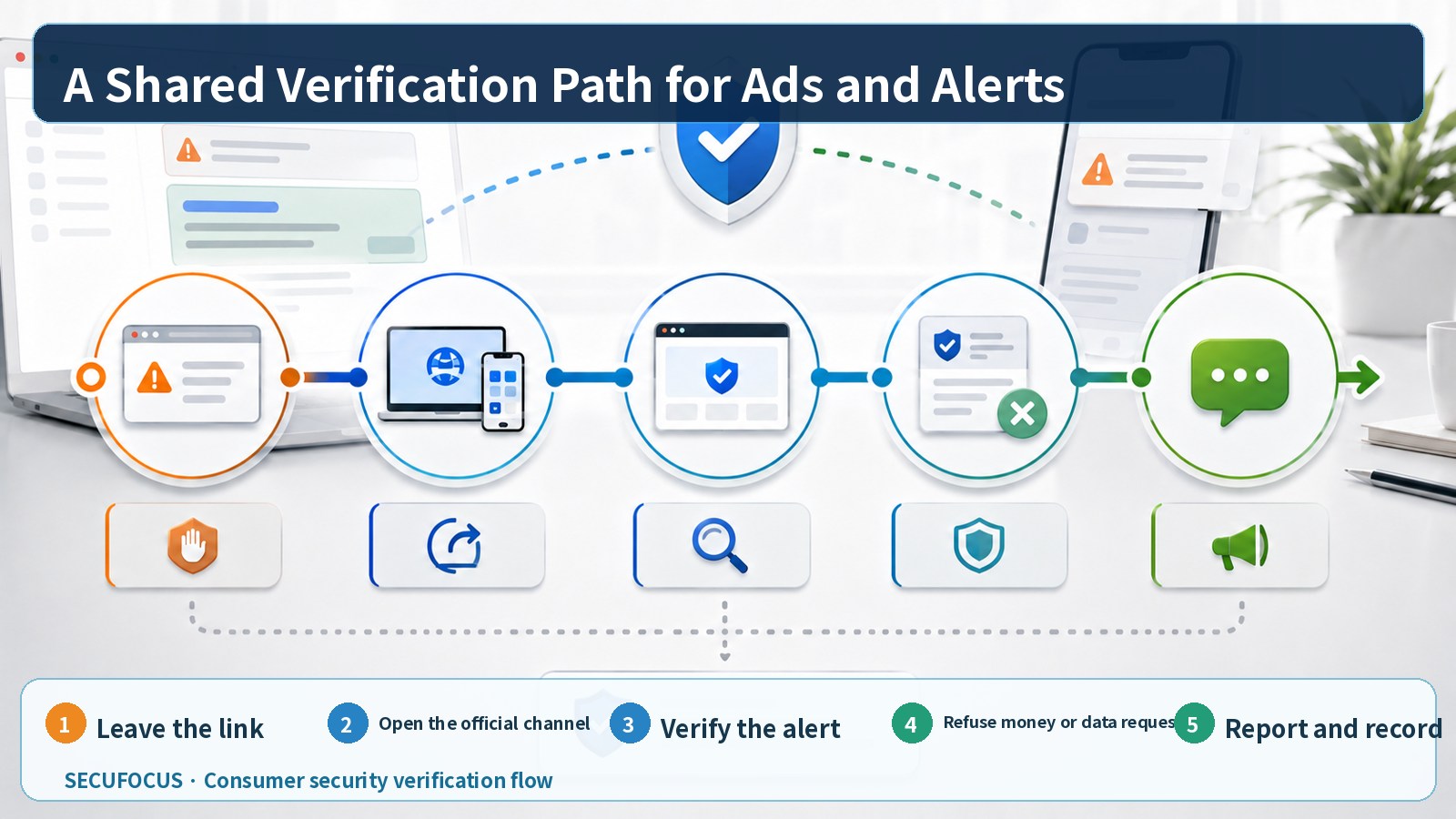
One response sequence for all three
- Close the message, ad, or search-result link.
- Open the official app or type the known official website address.
- Verify that the payment, warning, or assistance program appears in the real account or agency channel.
- Refuse requests for upfront payment, verification codes, remote-control software, or configuration profiles.
- Preserve the screen and payment record, then report it to the card issuer, platform, law enforcement, or responsible agency.
One habit for the week
Separate the place where you received the claim from the place where you verify it. Check a bill through the biller's app, an Apple warning through the Apple Account page, and a debt-relief offer through the responsible public agency.
Verification basis: sources published through August 18, 2026 at 15:59 KST were reviewed. Unconfirmed victim counts, attacker identities, and individual infection claims were not inferred.
Sources reviewed
- Bill Payment Firm Doxo to Pay $2.1 Million to Settle FTC Allegations It Deceived Consumers and Charged Them Add-On FeesFederal Trade Commission · Official source
- Searching Online: Bill Pay ImpersonatorsFTC Consumer Advice · Official source
- About Apple threat notifications and protecting against mercenary spywareApple Support · Official source
- Struggling with tax debt? Here's what to knowFTC Consumer Advice · Official source
- If Apple sends you a push notification alerting you to a spyware attack, take it seriouslyTechCrunch
SECUFOCUS NOW reorganized and analyzed the material above. This article does not replace the original sources.
Related SecuNote articles
August 22 Consumer Security Briefing: Fake Apple Support, Spoofed Calls, and Home Visits
Scammers are borrowing trust from pop-up alerts, familiar caller IDs, and official-looking identification. This briefing explains…
Fake Buyer-Protection Portals: Refund, ID and Bank-Detail Checks
A newly disclosed HKICL impersonation scheme combined refund support, identity verification, bank details, a fake wallet and an…
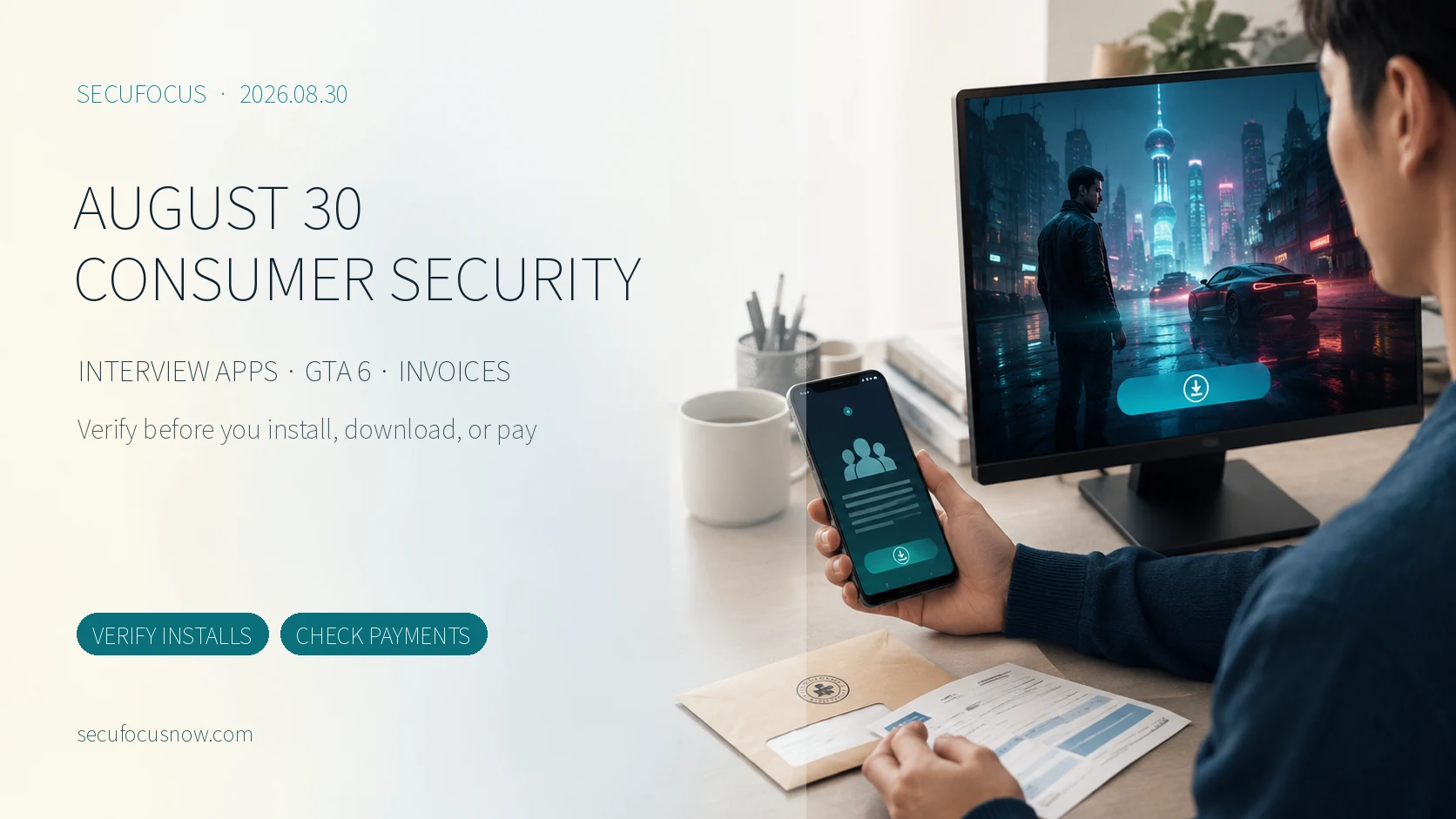
August 30 Consumer Security Briefing: Fake Interview Apps, GTA 6 Downloads, and Municipal Invoices
Three recent schemes exploit trusted moments—a job interview, a highly anticipated game search, and a municipal invoice. This…
Comments
No comments yet.