
August 22 Security Briefing: BounceBit, Apollo, and Triple-A
A source-grounded briefing on the BounceBit authorization exploit and BNB Chain migration, Apollo Global’s cloud data breach, and Triple-A’s operational-wallet incident post-mortem.

Today’s Major Security Issues
Today’s briefing examines three different trust boundaries. BounceBit’s incident centered on protocol-level authorization rather than stolen private keys. Apollo Global reported unauthorized access to certain cloud platforms following a social-engineering incident. Triple-A’s post-mortem describes a multi-channel impersonation campaign that compromised engineering credentials, escalated privileges, deployed malware, abused legitimate API credentials, and reached operational wallets containing company treasury assets. Each case shows why the origin of a request must remain bound to the authority that executes it.
The operational priorities are equally distinct. BounceBit holders should use the official pre-exploit snapshot and BNB Chain reissuance process as the source of truth. Organizations exposed to social engineering should join help-desk verification, session review, and cloud privileges into one workflow. Triple-A’s case shows how separating operational wallets, client funds, and regulated entities can reduce the blast radius even after an initial account compromise.
Issues at a Glance
- BounceBit Chain: An Evmos native-module authorization flaw allowed about 286.5 million BB to move from nine mainnet accounts in 14 transactions. The chain was halted, and BB will be reissued as a BEP-20 token on BNB Chain from a pre-exploit snapshot.
- Apollo Global: Unauthorized access occurred on certain cloud platforms from July 6 through July 10. The affected information included names, dates of birth, contact details, home addresses, and Social Security numbers.
- Triple-A: Multi-channel social engineering compromised engineering credentials, followed by privilege escalation, malware, and abuse of legitimate API credentials to withdraw company treasury assets from operational wallets. The incident was contained in about three hours, while client funds remained in segregated trust accounts.
Major Incidents
BounceBit Chain Authorization Exploit
BounceBit’s August 21 security update states that the exploit ran from 21:02 UTC on August 19 to 01:54 UTC on August 20. The attacker moved roughly 286.5 million BB in 14 transactions from nine mainnet accounts. The incident did not depend on a stolen private key or a forged signature. A native module in the Evmos-based chain failed to verify that the account identified as the source of funds had actually authorized the smart-contract call.
BounceBit halted block production near block 20,702,857 and froze the chain state. Instead of patching and restarting the Layer 1, the project chose to retire the standalone chain permanently and reissue BB as a BEP-20 token on BNB Chain. The distribution uses the state at block 20,697,260, immediately before the first unauthorized transfer. The attacker’s transfers are excluded from the new balances, and holders are expected to receive the replacement asset automatically from the snapshot.
Holders should focus on where BB was held and when the balance existed. Self-custody holders can compare their position with the official snapshot process; exchange customers should follow their exchange’s deposit and withdrawal notices. Migration periods also create fertile ground for fake “manual recovery,” “balance sync,” or emergency-airdrop pages. Do not connect a wallet or grant token approval through an unofficial link.
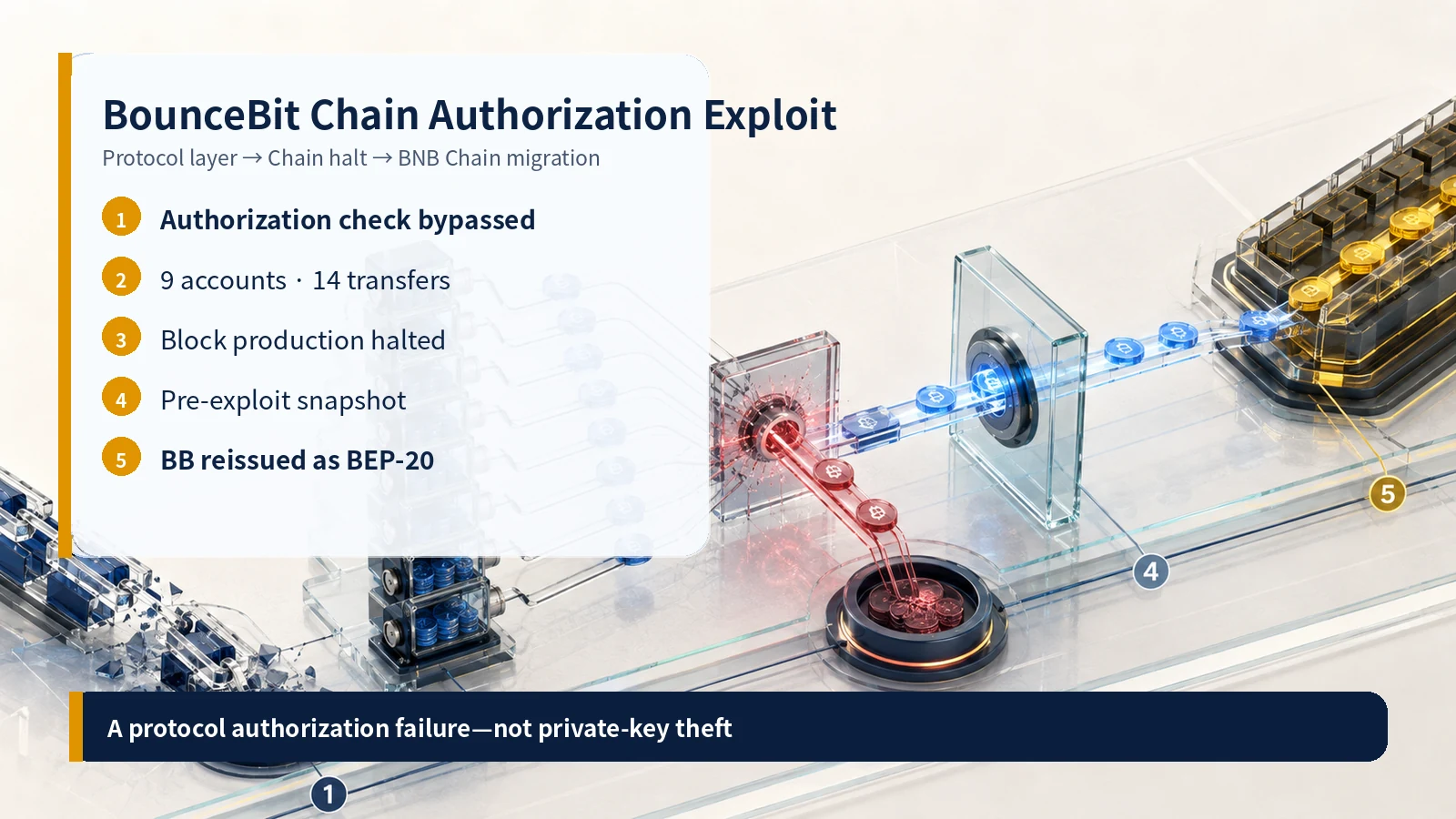
- Balance location: Separate self-custody and exchange balances and compare them with the official snapshot.
- Official notices: Follow BounceBit and the relevant exchange for reissuance and withdrawal timing.
- Signature safety: Reject links that demand a manual migration, wallet connection, or token approval.
- Protocol review: Chains using Evmos-derived modules should review source-account and authorization checks.
Apollo Global Cloud Data Breach
Apollo Global Management’s notice and August 21 reporting describe unauthorized access to certain cloud platforms between July 6 and July 10. Apollo attributed the incident to social engineering and later identified names, dates of birth, contact information, home addresses, and Social Security numbers among the affected information. The company notified law enforcement, engaged external cybersecurity and forensic specialists, and offered affected individuals identity-protection and credit-monitoring services.
The case illustrates why cloud security cannot be reduced to configuration alone. Once social engineering gives an attacker valid credentials or a session, activity can arrive through normal accounts and browsers. Defenders therefore need to correlate unusual login location, time, and device information with privilege changes, new tokens, and large data access. Financial and professional-services firms also need verification procedures that assume attackers can combine public employee data with convincing calls and tailored websites.
Recipients of a breach notice should type the organization’s official web address directly before enrolling in any protection service. Where identity and Social Security data are involved, review credit reports and new-account alerts, then contact the financial institution through its published support number if an unfamiliar loan, card, or address change appears. Organizations should treat help-desk identity checks, phishing-resistant authentication, session revocation, token recovery, and audit-log preservation as one coordinated response.
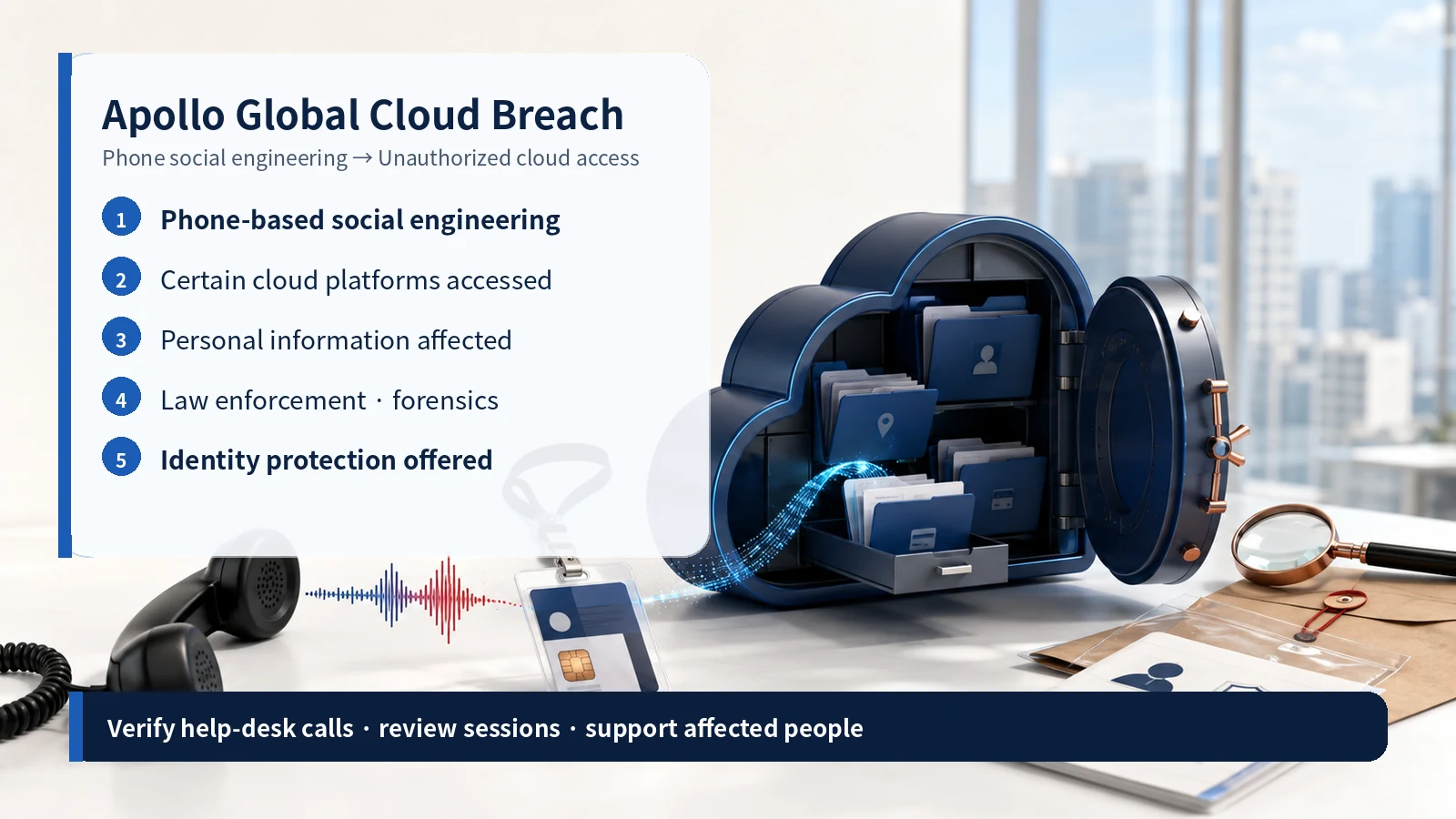
- Individual response: Use the official notice path, enroll in offered protection, and review credit activity.
- Channel verification: Prefer the organization’s official site and published phone number over embedded links.
- Account response: Revoke suspicious sessions, reset credentials, and enable phishing-resistant MFA.
- Cloud tracing: Correlate sign-ins, privilege elevation, token issuance, and bulk data access.
Triple-A Operational Wallet Incident Post-Mortem
Triple-A’s August 21 post-mortem traces the July 25 incident to operational wallets of its Singapore entity. The attackers built trust across multiple communication channels, impersonated identities, and used a live call to compromise an engineer’s credentials. They then entered an operational environment, obtained higher-level permissions, deployed malware, accessed production databases, abused legitimate API credentials, and executed unauthorized withdrawals from wallets on TRON, Ethereum, Polygon, and Arbitrum.
Triple-A detected the unauthorized access at about 02:39 GMT, activated its incident response process, formed an incident committee, and placed selected services in maintenance mode. Sygnia and zeroShadow were engaged for forensics and blockchain tracing, while the Monetary Authority of Singapore and Singapore Police Force were notified. Initial containment and verification were completed around 05:15 GMT, allowing services to return in roughly three hours. Active attacker access and the identified persistence mechanisms were removed.
Asset architecture limited the impact. The affected wallets held Triple-A’s own treasury assets used for conversions. Client money was kept separately in segregated trust accounts with safeguarding institutions including DBS and Standard Chartered, outside the compromised operational environment. The company absorbed the treasury loss through its reserves while client transactions and settlements continued. The incident is a concrete example of how pre-established separation determines what an attacker can reach after a credential compromise.
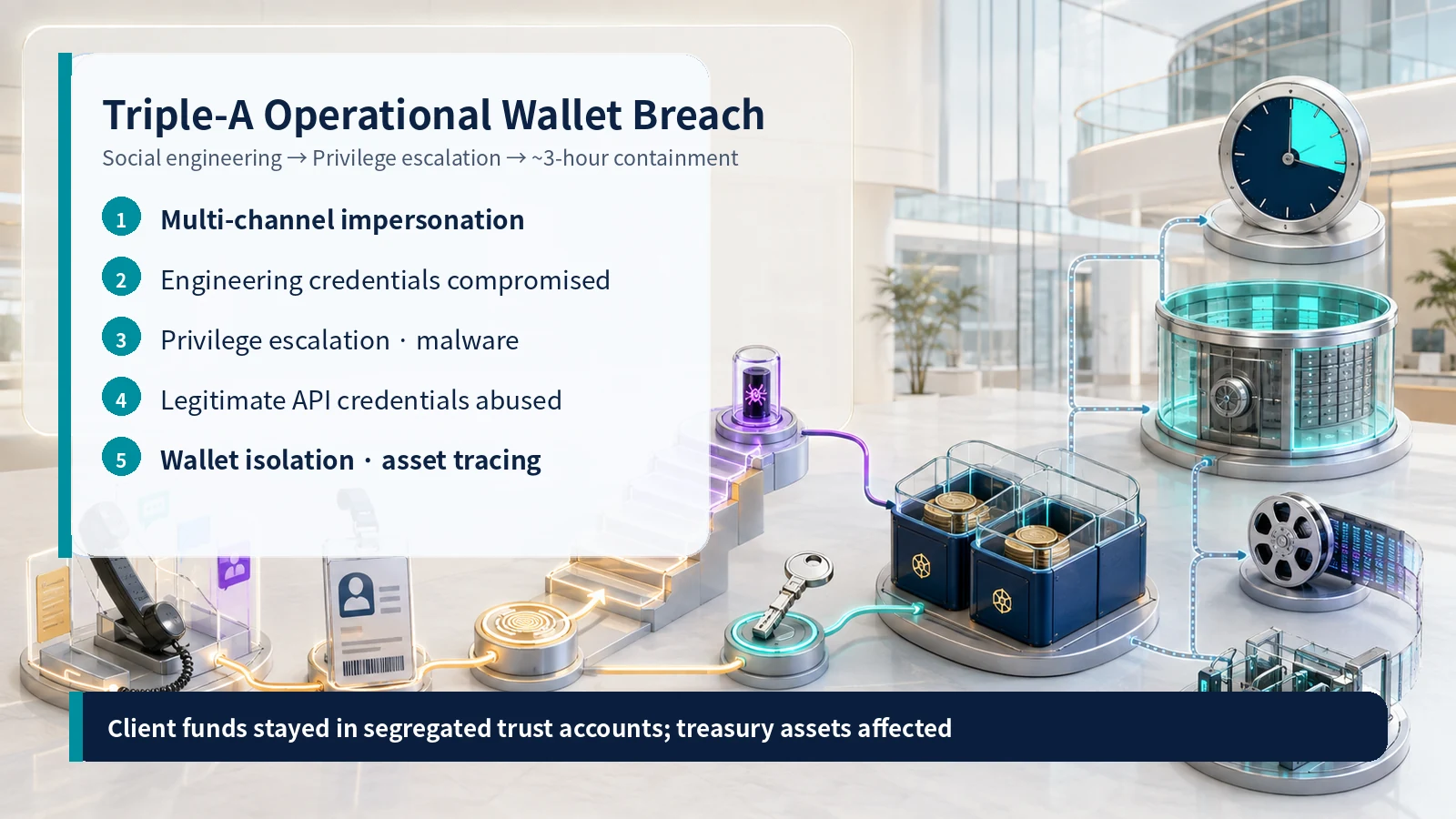
- Call verification: Reconfirm privileged support and access requests through a separate channel.
- Production access: Reduce the number of users and strengthen approvals for sensitive wallet activity.
- Environment separation: Isolate corporate, production, and operational-wallet environments.
- Real-time detection: Correlate credential misuse, privilege escalation, API-key use, and abnormal withdrawals.
- Wallet limits: Review operational-wallet exposure and transaction approval thresholds.
Operational Notes
Across all three issues, start by validating the source of authority. A blockchain transaction should bind its funding source to the real approver; a cloud login should bind the account to the person initiating the request; and an operational-wallet environment should prevent one engineering credential from opening a continuous path to production data and API credentials. Next, reduce the reachable blast radius through snapshots, session revocation, environment separation, and wallet limits.
Finally, keep users and responders anchored to the same official source. Token reissuance, identity-protection enrollment, and asset-tracing updates all create opportunities for secondary scams or conflicting instructions. Record the official URL, revision time, owner, and validation result in the incident ticket. A clear chain of who checked what—and which authority was removed—will do more to prevent re-entry than urgency alone.
Sources reviewed
- BounceBit Chain Security Incident UpdateBounceBit · Official source
- Apollo Global reveals data breach after hackers target financial firmsReuters
- Triple-A Security Incident: Post-MortemTriple-A · Official source
SECUFOCUS NOW reorganized and analyzed the material above. This article does not replace the original sources.
Related SecuNote articles
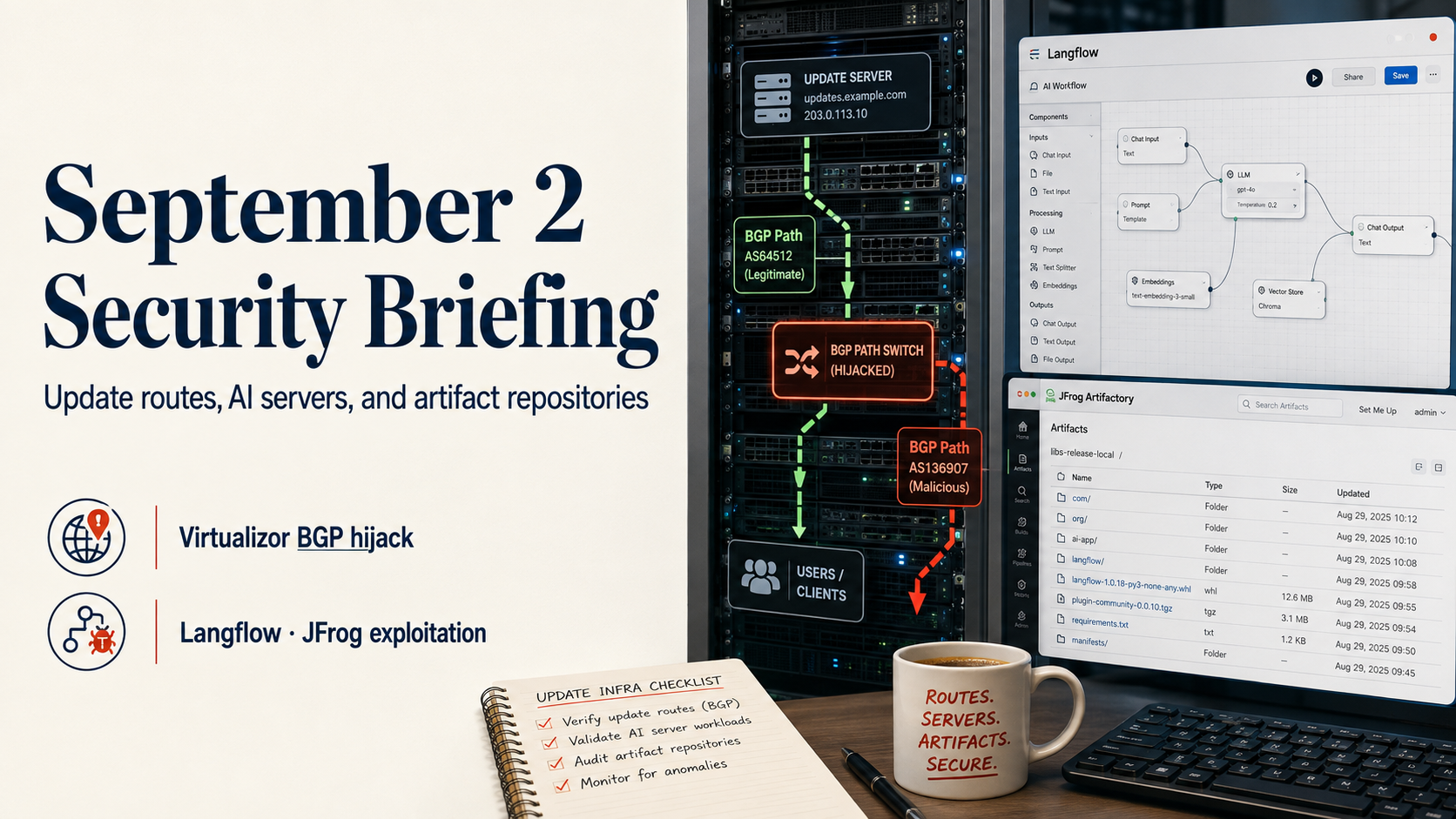
September 2 Security Briefing: Virtualizor, Langflow, and JFrog Attacks
A practical review of the Virtualizor BGP hijack and newly observed exploitation of Langflow and JFrog Artifactory, with response…
September 1 Security Briefing: PaperCut KEV, Rails Exploitation, and Fraudulent Hiring
This briefing covers the new KEV priority for two PaperCut flaws, observed exploitation of Ruby on Rails CVE-2026-66066, and…
August 31 Security Briefing: ash_graphql, Open5GS and AJCloud Fixes
This briefing covers six ash_graphql 1.11.0 security fixes, two Open5GS AMF vulnerabilities, and an AJCloud camera firmware…
Comments
No comments yet.