
AI-Assisted Intrusions Against Taiwan Government Agencies: What Authorities Confirmed
Taiwan’s Ministry of Digital Affairs confirmed that government agencies faced an overseas AI-assisted intrusion campaign in July 2026 and said affected bodies completed response actions. This report separates the ministry’s confirmed account from a security vendor’s scale and autonomy claims, then translates the incident into concrete identity, token, and logging checks for operators.
Incident summary
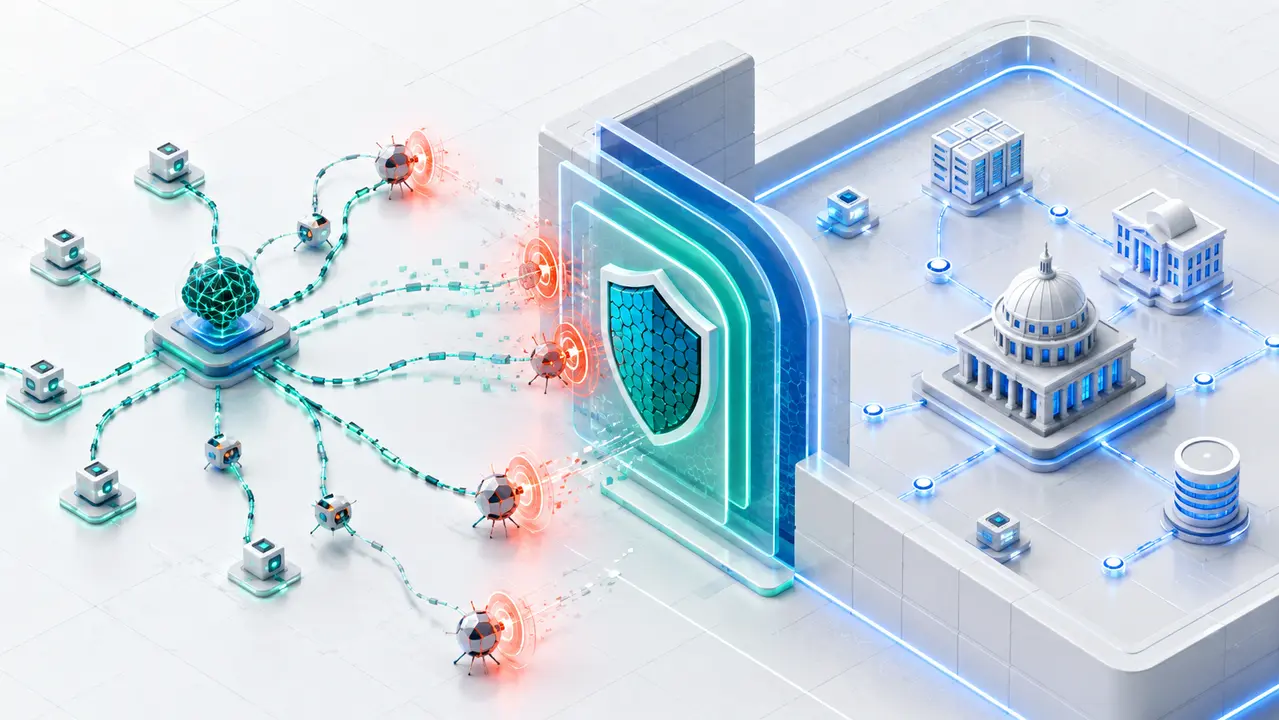
Taiwan’s Ministry of Digital Affairs said on August 13 that government agencies had been targeted in an overseas AI-assisted intrusion campaign during July 2026. The ministry described a hybrid operation combining manual activity with support from AI agents such as OpenClaw, and said the affected bodies completed the required response after the source, methods, and impact scope were examined.
The confirmed baseline is narrower than several headlines suggest: an AI-assisted campaign did target government agencies, and Taiwan’s monitoring organizations detected it. Figures involving 85 accounts, more than 2,500 personnel records, expansion toward nuclear-safety and energy organizations, and a possible China connection come from reporting on analysis by Israeli cybersecurity firm Dream. They are not equivalent to details formally disclosed by the Taiwanese government.
What was disclosed
The abnormal activity detected in July
According to the ministry statement reported by Reuters, Taiwan’s cybersecurity monitoring teams detected abnormal activity against government agencies in July. Beginning July 20, the National Institute of Cyber Security issued a series of alerts while the activity was examined. The ministry said the campaign displayed characteristics of an overseas source and combined human operation with AI-agent assistance.
Taiwan said the source, techniques, and scope had been established and the affected agencies had completed response actions. It also introduced protective guidance and expanded monitoring across government systems. The public statement did not identify the agencies, the exact systems accessed, the categories of data involved, or the technical indicators used to detect the campaign.
Scale described by Dream
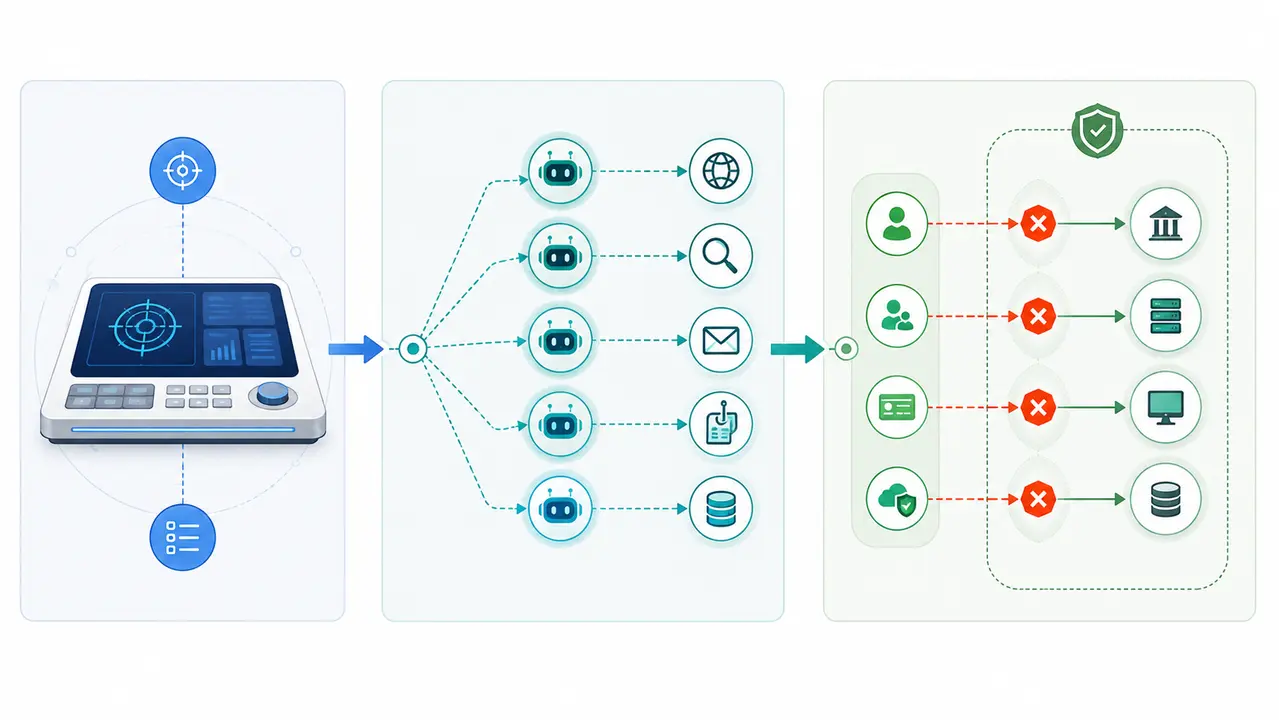
Reports citing Dream describe multiple agents performing reconnaissance, access-path discovery, and credential-related tasks in parallel. The reported findings included at least 85 government user accounts, more than 2,500 personnel records, activity involving the justice ministry, and scanning directed at the nuclear-safety authority and energy companies.
Dream said it reconstructed the operation from a recovered workspace. It did not provide the underlying data to Reuters and initially declined to name the government involved. The figures therefore help define a plausible upper range of the incident, but they are not a final victim notification or a regulator-verified accounting of affected records.
Human direction remained part of the chain
AI agents can accelerate repetitive work: organizing targets, testing several access paths, and choosing the next step from partial results. That does not remove the operator who selected the target, supplied the tools, and initiated the objective. Describing the campaign as an attack conducted entirely by AI would obscure both human decisions and the identity-control weaknesses that made access possible.
What remains unconfirmed
Taiwan did not attribute the activity to a country or named group. Simplified Chinese observed in material analyzed by Dream may be an attribution clue, but it is not sufficient on its own to establish the operator or state sponsorship.
Public material does not specify the initial-access vector, exploited vulnerabilities, credential type, data scope for each agency, or whether any persistence survived containment. A detailed technical report from Taiwanese authorities, direct notices from affected bodies, or independently verifiable indicators could materially change the current assessment.
Checks for operators
Government bodies and organizations with large identity estates should avoid treating “AI attack detection” as a separate product category. A practical starting point is to look for activity that compresses many account and service probes into a short period, using existing identity, network, and cloud logs. Begin with read-only review and move to revocation or isolation only when evidence supports it.
- Review the last 30 days of sign-in events for rapid geographic changes, new user agents, and sudden API-call increases tied to the same identity.
- Separate administrator, service, and application identities, then inspect recent privilege elevation, new role assignments, and previously dormant tokens.
- Align timestamps across email, SSO, VPN, cloud, and business-system logs to identify sequential or parallel access by one identity.
- If a suspicious session is confirmed, revoke the session and refresh tokens first, establish scope, and then rotate passwords and application secrets.
- After containment, check whether the same identity, IP address, device identifier, or token reappears, and verify that alerts remain quiet through at least one normal business cycle.
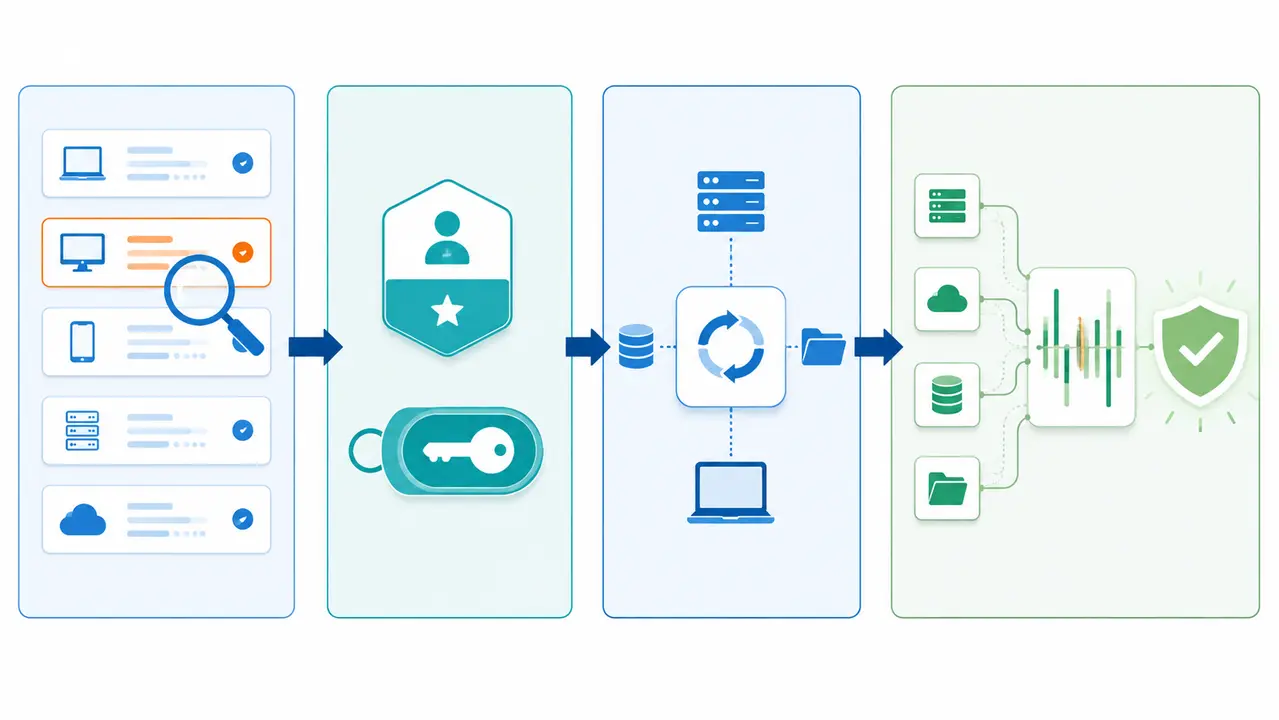
CISA’s hardening guidance recommends phishing-resistant multifactor authentication, shorter session-token lifetimes, role-based access controls, removal of unnecessary accounts, and continuous identity monitoring. As parallel probing becomes faster, defenders need logs that preserve the timing relationships among accounts, tokens, and services rather than relying on isolated alerts.
Impact assessment
No confirmed direct impact on South Korea
As of 6:05 p.m. KST on August 15, 2026, the reviewed public sources did not identify South Korean agencies, organizations, or users as direct victims. The account and record counts reported in Taiwan should not be extrapolated into a Korean impact estimate.
Indirect relevance for Korean organizations
The operating model is relevant to Korean government bodies, energy and communications providers, and large SaaS environments where one identity platform connects many business services. The exposure conditions are not the mere existence of AI tools. They are internet-facing administration surfaces, excessive privileges, long-lived session tokens, and logs that cannot be correlated across systems.
Security teams should prioritize reconstructing where and how quickly one credential moved across services rather than trying to prove AI use at the start of an incident. Baselines for privileged and service identities, combined with validation after token revocation, help detect and contain both human-led intrusions and campaigns accelerated by agents.
Sources
[CISA, Enhanced Visibility and Hardening Guidance for Communications Infrastructure]
https://www.cisa.gov/resources-tools/resources/enhanced-visibility-and-hardening-guidance-communications-infrastructure
[Reuters, reporting Taiwan’s Ministry of Digital Affairs statement]
https://www.reuters.com/world/china/taiwan-says-it-was-targeted-last-month-ai-driven-hacking-campaign-2026-08-13/
[The Guardian, cross-reporting the ministry statement and Dream analysis]
https://www.theguardian.com/technology/2026/aug/13/taiwan-ai-assisted-cyber-attacks-overseas
[Financial Times, initial report on Dream’s findings]
https://www.ft.com/content/7d2ab3e0-9085-48f6-b38a-d90260d58795
Evidence cutoff: 6:05 p.m. KST on August 15, 2026. Later notices from affected organizations or a technical release from Taiwanese authorities may change the assessed scope and attack chain.
More SECUFOCUS incident analysis and response guidance is available at secufocusnow.com.
https://secufocusnow.com
Sources reviewed
- Enhanced Visibility and Hardening Guidance for Communications InfrastructureCybersecurity and Infrastructure Security Agency (CISA) · Official source
- Taiwan says it was targeted last month in AI-driven hacking campaignReuters
- Taiwan says it was hit by ‘abnormal’ AI-assisted cyber-attackThe Guardian
- China-linked hackers hit Taiwan in unprecedented ‘autonomous’ AI cyber attackFinancial Times
SECUFOCUS NOW reorganized and analyzed the material above. This article does not replace the original sources.
Comments
No comments yet.