
France’s DGFiP Breach Confirmed: Data of 678,000 Taxpayers Stolen
France’s Finance Ministry confirmed that a DGFiP cyberattack led to the theft of data belonging to 678,000 individual and professional taxpayers. This report reconstructs the disclosure timeline, separates containment from exfiltration analysis, and sets out practical checks for affected users and sensitive-data operators.

Incident overview
France's Finance Ministry has confirmed that a cyberattack on the General Directorate of Public Finances, or DGFiP, led to taxpayer records being viewed and extracted. A ministry update reported by Reuters on August 14, 2026 put the affected population at 678,000 individual and professional users.
The case warrants close attention because it involves confirmed data extraction from a public system used for tax administration and taxpayer services. Network access was cut off before the public disclosure, while the determination that records had been extracted came through a later investigation. Individual notifications and regulatory and criminal procedures followed.
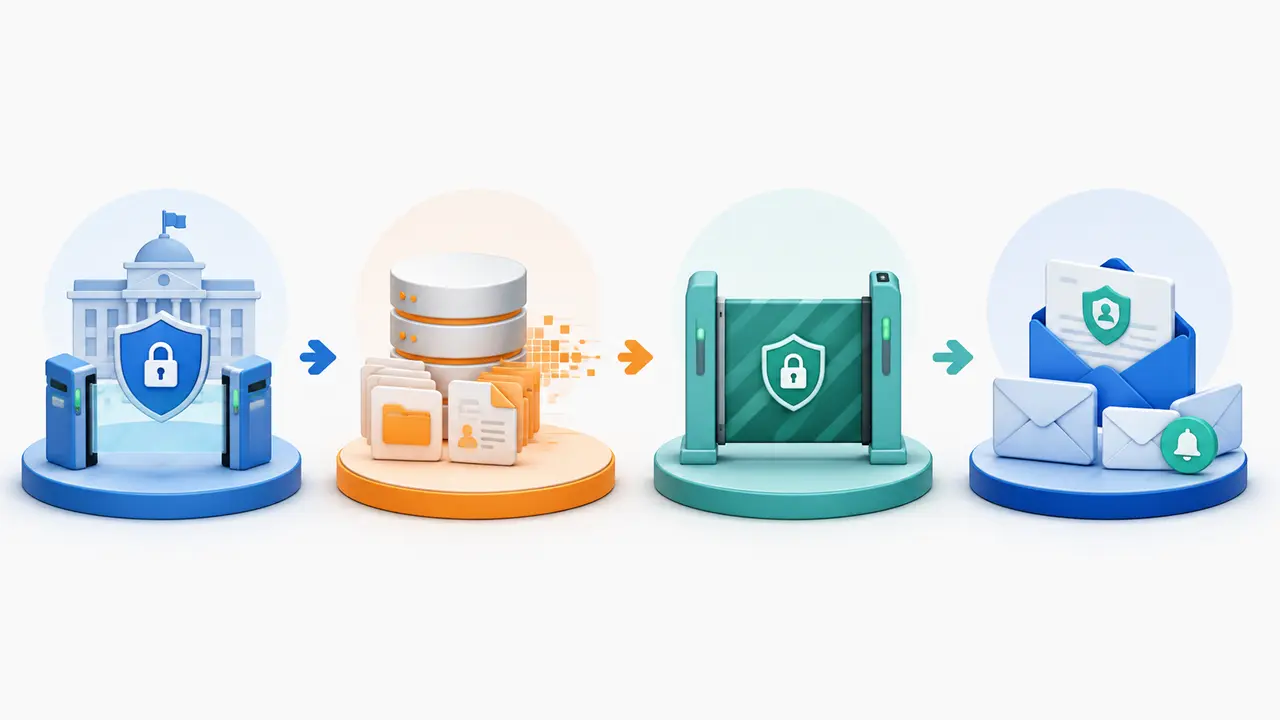
Verified timeline
- Late-June containment — DGFiP cut off the intruder's access during a routine check and introduced new access restrictions.
- August 12 public claim — A person claiming responsibility advertised DGFiP data on a cybercrime forum.
- August 13 confirmation — The Finance Ministry said its investigation had confirmed the cyberattack and the consultation and extraction of taxpayer data.
- August 14 scope update — The ministry said data belonging to 678,000 users had been stolen.
The sequence separates two tasks that are often conflated during incident response. Terminating an unauthorized session contains further access, but it does not establish whether data had already been searched, exported, staged, or transmitted. That question requires a separate evidence review.
Confirmed exposure
The ministry confirmed that data belonging to both individual and professional taxpayers was consulted and extracted. It also said affected users would receive individualized information describing the data that may have been accessed or taken, along with precautions relevant to their exposure.
Le Monde reported that a sample it reviewed contained names, home addresses, personal phone numbers, reference taxable income, tax rates, household dependants, and details of the tax office and agent handling a case. Those fields describe the reviewed sample, not a uniform record layout for every affected user. Risk assessments should therefore follow the fields named in each official notification.
Detection boundary
The most instructive feature of the disclosure is the gap between access containment and confirmation of extraction. DGFiP reportedly severed access at the end of June during a routine check. The ministry later confirmed the data theft after the sale claim became public and investigators reviewed the incident.
For defenders, disabling an account or closing a VPN session should not be the closing condition for an investigation. Authentication records, database queries, report generation, archive creation, bulk downloads, temporary storage, proxy logs, and outbound transfers need to be reconstructed on one timeline.
Risk profile
Tax records can combine identity, location, income, household, and administrative context. That combination is valuable for highly tailored impersonation. A fraudulent caller or message sender may appear credible by referring to a genuine tax-office interaction, an income figure, or the office responsible for a taxpayer's case.
The number of affected users defines the notification workload but does not fully describe the downstream risk. Record age, field combinations, administrative context, and the attacker's ability to segment targets all influence how exposed individuals and businesses may be approached.
Checks for affected users
- Official notice review — Read the individual DGFiP notice for the specific fields involved and the precautions assigned to them.
- Direct portal access — Type impots.gouv.fr into the browser and verify messages inside the authenticated account instead of following links in email or text messages.
- Impersonation screening — Reject requests for passwords, one-time codes, payment-card details, or urgent transfers framed as tax refunds, arrears, or account suspension.
- Evidence retention — Preserve suspicious messages, sender addresses, phone numbers, web addresses, and transaction details.
- Linked-account review — Inspect recent sign-ins, forwarding rules, and recovery methods on the tax account and its associated email account.
The official notice should determine the scope of personal checks. Where address and income data appear together, tax- and bank-themed contact deserves stricter scrutiny. Business records should also be shared with the organization's accounting or tax team so that verification procedures remain consistent.
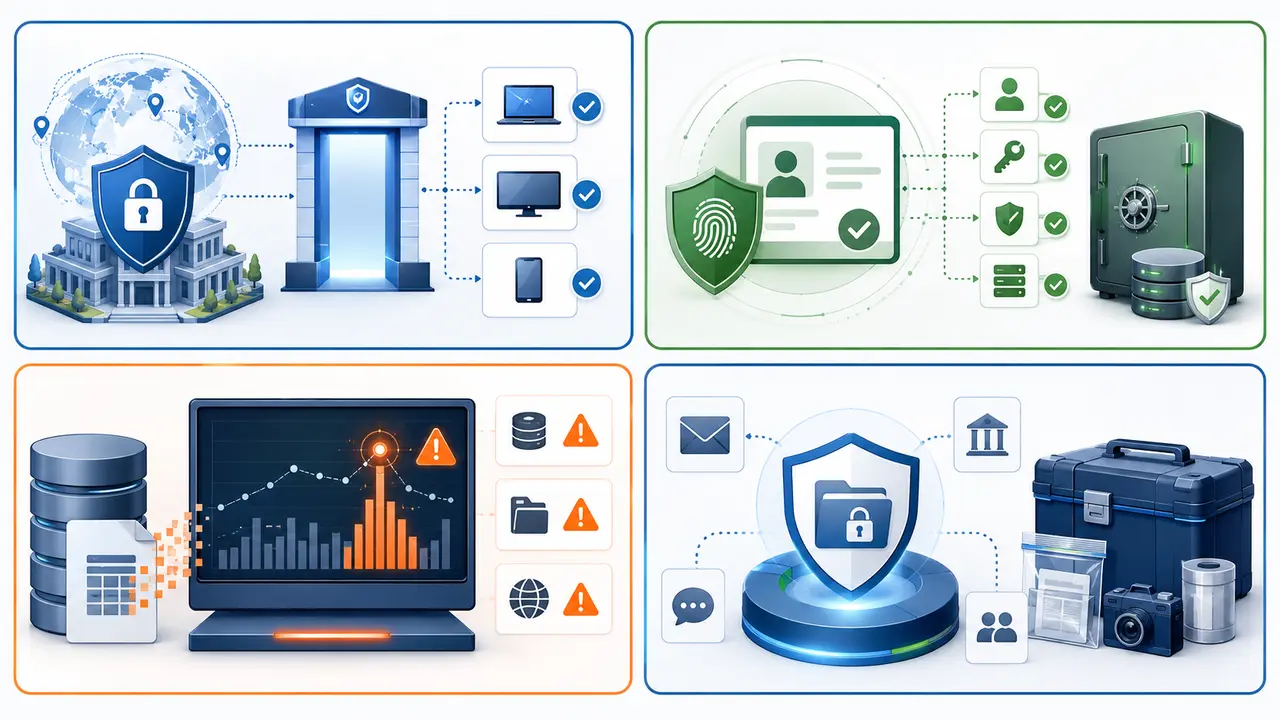
Operational review
- Remote access controls — Reassess the VPN and administration portals, allowed users, authentication strength, session duration, and unusual location or device signals.
- Privileged activity — Review permission changes, concurrent sessions, unusual search ranges, and volumes that do not match the user's normal role.
- Bulk data movement — Correlate exports, archive creation, high-volume API calls, downloads, staging paths, and outbound transfers.
- Evidence preservation — Retain authentication, application, database, proxy, and DLP records before accounts and systems are changed.
- Notification preparation — Map exposed fields to plausible misuse, then provide a direct verification route and a reporting channel.
Bulk-extraction monitoring works better when it uses role and workload baselines rather than one global threshold. Legitimate tax operations can generate large reports. A higher-confidence signal is a sequence of sensitive-field access, unusually broad queries, archive creation, download activity, and outbound communication.
Relevance for Korean environments
Korean public-sector, financial, and tax-data operators can apply the case as an operational reference. The central lesson is to continue the data-access investigation after remote access has been blocked, and to preserve enough field-level evidence to explain each affected person's exposure.
Citizen-service and case-management systems often allow one authorized account to retrieve records for many people. Detection therefore needs to examine how a valid account is used: the number of subjects queried, sensitive-field combinations, repeated search patterns, and export behavior. Incident exercises should extend through affected-user identification and individualized notice preparation.
Agency response
DGFiP introduced additional access restrictions and is investigating with support from France's National Cybersecurity Agency, ANSSI. The ministry said it would file a criminal complaint, notify the data-protection regulator CNIL, and send individualized information to affected users.
Future disclosures may refine the exposed fields or explain the intrusion path in greater detail. Defenders should keep the event record current by linking field-level exposure, log findings, notification history, and corrective controls instead of preserving only the first reported victim count.
Sources
- Reuters — French taxpayers' data stolen in cyber attack, French Finance Ministry says, August 14, 2026
- Le Monde — French taxpayers' data stolen in hack of Finance Ministry, August 14, 2026
Sources reviewed
- French taxpayers' data stolen in cyber attack, French Finance Ministry saysReuters
- French taxpayers' data stolen in hack of Finance MinistryLe Monde
SECUFOCUS NOW reorganized and analyzed the material above. This article does not replace the original sources.
Comments
No comments yet.